Cleanup availability and timing vary — call to confirm. · (303) 879-2581
Garage Sewage Backup Cleanup in Longmont, CO
Garage cleanup guide

Cleaning a Sewage Backup in a Longmont Garage

Longmont’s rain and snow can leave garage conditions cold or damp, which may slow drying after cleanup. Season does not identify a backup’s source; affected materials and moisture need assessment whenever sewage reaches the space.

PROPERTY CHECKS

Garage cleanup begins with mapping the sewage’s reach, then separating the affected zone and assessing surfaces and contents. Materials are removed when needed; remaining areas are cleaned, disinfected, and dried. The owner should keep household traffic out and avoid moving contaminated belongings until the assessment is complete.

Exposure Clues

Warning Patterns Across Home Fixtures

A wet storage area can shift attention from the backup itself to exposed contents and surfaces.

Near Ames Park, gritty sewage tracks stop beneath parked tires.

A waterline at the garage threshold shows that flow may have reached the doorway, even if the main wet area was farther inside. The boundary may extend beyond the visible mark. Keep the doorway out of household use and have the route assessed before nearby floors or stored goods are disturbed.

By Mead Ponds, dark splashes mark the lower garage door.

A strong sewage smell can linger after liquid has drained, signaling that residue or affected material may remain. Fragrance only masks the odor and gives no indication that the garage is clean. Keep the space closed to routine use and include the odor source in the assessment.

Garage mats feel slick where contaminated runoff crossed their edges.

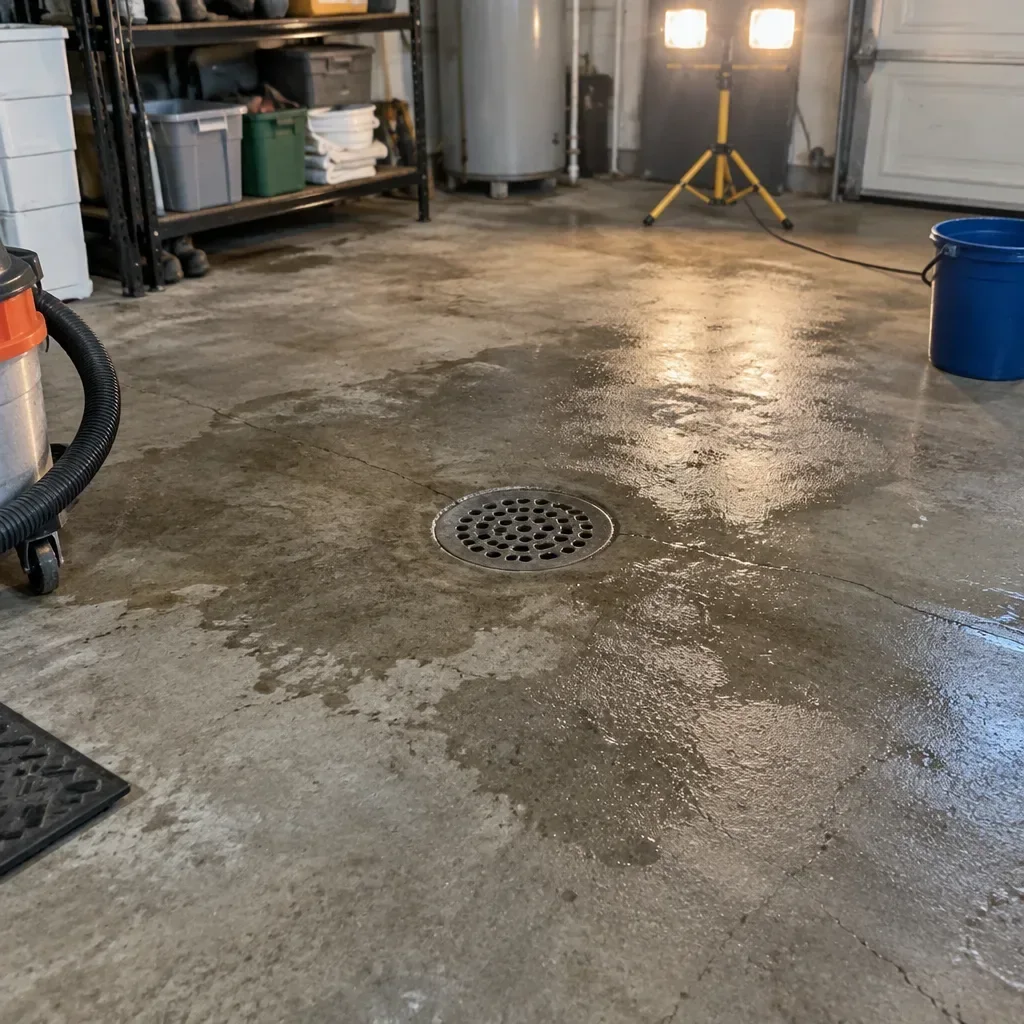
Fine grit or a tacky film on the slab can mark where sewage carried debris across the garage. Dry sweeping may scatter that residue, so leave the surface undisturbed. The pattern can help an assessor understand the flow route and where the work boundary belongs.

Paper cartons slump where dampness reached their bottom seams.

A swollen box or softened stored packaging suggests absorbent contents may have taken in sewage. The damage can extend beyond what is visible on the outside. Do not open or sort the items; note their location for the assessment and keep the surrounding space unused.

Stored tools show speckled residue around handles and casings.

Dampness or staining along a garage wall base can point to contact beyond the open slab. Water may have reached a concealed edge behind trim or equipment, changing what needs inspection and drying. Avoid pulling fixtures or stored items away; report the location for a closer review.

Deciding Which Materials Can Stay

Longmont addresses can differ in wastewater provider, connection, and service-line arrangement. A city name or ZIP does not reveal which system serves a particular garage, so those details need property-level confirmation before anyone attributes the backup to a specific line or provider.

Rain and snow occur across the Northern Front Range, but that context cannot explain an individual backup. A home near County Road 34, Founders Park, or Vrain Creek still needs its own source check; visible water alone does not show whether it is sewage.

Residential cleanup inquiries come from properties in Longmont and around Boulder. The pros we connect you with can verify service for the specific home, because the city name does not show which provider serves it or whether the property uses public sewer.

Restoring Safe, Clean Surfaces

Entry path
Sewage can leave residue in slab seams and wall edges after visible water recedes.
Hard finish
Stored contents can screen the garage floor and complicate tracing the flow boundary.
Stored goods
Absorbent garage contents may need removal if sewage has soaked into them.
Affected edge
Drying checks include concealed edges where moisture may remain after the slab feels dry.
Moisture check
Cleanup addresses indoor contamination; plumbing work locates or repairs the backup source.
PHOTO NOTES
Longmont’s rain and snow can leave garage conditions cold or damp, which may slow drying after cleanup. Season does not identify a backup’s source; affected materials and moisture need assessment whenever sewage reaches the space.
ROOM COUNT
an estimated $3,500–$6,500

Looking Beyond the Sewer for Water Sources

Stormwater garage flooding can leave muddy tracks and stained concrete that resemble sewage damage. Since appearance alone may not settle the source, suspected sewage calls for a contamination assessment before anyone treats the area as ordinary flood residue. Stormwater can leave mud and tide marks, while a sewer backup brings sewage contamination. Color or odor may offer clues but cannot always establish the source. Tell the assessor what happened and have the property’s wastewater connection checked before assuming which system was involved.

Choosing Which Materials Need Removal

The pros we connect you with assess the garage from the visible flow marks outward, checking slab seams, wall bases, thresholds, and screened areas. They establish a work boundary and separate the affected zone from clean space. That map guides the order of the work and helps avoid carrying residue into unaffected parts of the home.

Once the affected contents and surfaces have been addressed, the drying plan accounts for moisture at the wall base, in joints, and behind accessible trim. The work area is checked as drying proceeds, since dampness left in a concealed edge can persist after the exposed slab feels dry. A plumber handles investigation or repair of the backup source separately.

A limited spill with few affected materials may be cleaned and assessed for drying in one visit. When sewage has spread into absorbent items or across several areas, the owner may need a removal and drying plan with follow-up checks. The assessment determines what can stay and what needs attention.

WHICH DAMAGE TASKS FIT CLEANUP AND WHICH REQUIRE FOLLOW-UP
Area Affected Keep People Clear
Overflow stayed within one small areaPlumber source referral
Wastewater traces surfacing again in cleared areasAffected-material assessment
Absorbent finishes can hold contamination below sightSewage residues extracted; treat surfaces, dry building

Leave Contaminated Material Decisions to Pros

Items resting on the floor may have residue on their undersides, even if their tops look clean. Do not walk through wet areas, shift boxes, sweep residue, or run equipment in the affected zone. Those steps can spread contamination. Keep access closed and arrange an assessment of the garage surfaces and contents.

Protective Steps Around The Cleanup Area

Sewage may carry germs in residue that is easy to miss once a puddle drains. Someone walking through the garage can track contamination into the house on footwear or tools, while a pet may carry it farther. Residue can remain on rough flooring or stored items after the water is gone. If contact occurs, wash exposed skin thoroughly; do not rely on the absence of odor as reassurance.

How Can Containment Change the Work Estimate?

Request a cleanup scope that separates porous contents from surfaces suited to disinfection; those choices and structural drying needs affect cost.The guide range reflects cleanup work in affected rooms, including material removal, surface treatment and drying where the assessment calls for them; it excludes plumbing diagnosis or repair. For a Longmont property, give the address and a useful location reference, such as Coal Creek or Northern Water. The pros we connect you with confirm any visit charge and written scope directly.The pricing guide lays out possible cleanup costs and explains which job details can shift them.
Restoration Notes

Checking the Home’s Wastewater Connection

Septic Backup Cleanup

Septic overflow response. After a septic backup, keep clear of the affected area and…

Common Questions

Questions and Answers

What happens first when sewage reaches a Longmont garage?

Cleanup starts by tracing the sewage’s route across the garage, including slab joints, wall edges, and areas beneath stored items. The affected zone is separated from clean parts of the home while wastewater and debris are dealt with. An assessment then guides which contents and materials need removal, cleaning, or drying. In Longmont, the owner should keep the space unused until that review establishes the contamination boundary.

Can delayed garage cleanup affect which materials need attention?

Yes. The longer sewage remains, the more opportunity it has to soak into cardboard, fabric, wall edges, or gaps in a garage slab. That can expand the materials requiring removal and make moisture control more involved. A dry-looking center does not show how far residue reached. In Longmont, arrange an assessment promptly and leave affected items in place until their condition and the surrounding area have been reviewed.

How do cleaners trace sewage through a crowded garage?

A crowded garage can hide the route sewage took. The assessment follows visible marks toward thresholds, slab seams, and lower wall edges, accounting for areas screened by stored goods. This helps set a boundary for the work without relying on the size of the puddle alone. The owner should avoid shifting boxes to expose the floor; movement can carry residue into a cleaner part of the garage.

Does garage cleanup find the cause of a sewer backup?

Garage cleanup addresses sewage and its effects inside the structure; it does not find or repair the pipe problem. A plumber or the appropriate provider can check the source and responsibility for the property. Longmont documents investigation of sewer backup reports, but an address or ZIP alone does not establish the cause. The owner can arrange cleanup assessment and source investigation as separate parts of the response.

Discuss Cleanup Help

Not sure how far the contamination spread?

Call to arrange an assessment and confirm its charge before setting a visit. Until the area has been reviewed, avoid handling contaminated materials and keep others clear. Ask for written findings and proposed steps, including removal decisions, cleaning, disinfection, odor treatment, and drying. A plumber can investigate the backup source.

Call (303) 879-2581
Check open dates, expected arrival, assessment fees, and the written work plan
Call (303) 879-2581 Schedule Online